Real-time conversation intelligence: The shift from post-call analysis to live insights
Real-time conversation intelligence is transforming customer interactions from post-call analysis to live insights. Learn how streaming speech-to-text enables proactive engagement.


Conversation intelligence transforms raw customer interactions into strategic business insights by using AI to capture, transcribe, and analyze conversations across channels, a market that projected market growth shows is expected to reach over $61 billion by 2033. This technology has evolved from basic post-call analytics to real-time systems that can influence outcomes while conversations are still happening.
The 2025 State of Conversation Intelligence Report reveals that more than 80% of respondents predict real-time conversation intelligence will be the most transformative market capability in 2025. As organizations move from reactive analysis to proactive intelligence, they're discovering how streaming speech-to-text and Voice AI enable them to act on insights during the moments that matter most.
This guide explores what conversation intelligence is, its business benefits, and how real-time capabilities are transforming customer interactions across industries. We'll examine the technical foundations that make this possible and dive deep into a practical use case showing how real-time agent assist delivers immediate value.
What is conversation intelligence?
Conversation intelligence is AI-powered technology that automatically transcribes, analyzes, and extracts insights from voice conversations to improve business performance. Unlike traditional call recording that simply captures audio, conversation intelligence transforms raw conversations into actionable data that drives measurable improvements. For instance, a 2025 survey found that 69% of companies saw improved customer service after implementation, alongside gains in sales coaching and operational efficiency.
Modern conversation intelligence platforms combine several Voice AI technologies to transform unstructured conversations into structured data:
This creates a comprehensive understanding of customer interactions that drives better business outcomes:
- Sales optimization: Teams identify winning talk patterns and successful closing strategies
- Quality monitoring: Support organizations monitor quality across every interaction
- Product intelligence: Product teams mine conversations for feature requests and pain points
The difference between conversation intelligence and traditional call recording is like the difference between having a transcript and having a strategic advisor. While recordings capture what was said, conversation intelligence reveals what it means, why it matters, and what to do about it.
Key business benefits of conversation intelligence
Organizations implementing conversation intelligence gain measurable competitive advantages across five key areas:
Improved sales performance and coaching
Conversation intelligence automatically identifies successful talk patterns, objection handling techniques, and closing strategies from top performers. This enables systematic coaching improvements across sales teams:
- Performance replication: Teams replicate winning behaviors systematically across the organization
- Coaching precision: Managers pinpoint specific improvement opportunities based on actual conversation data
- Measurable outcomes: Organizations report significant improvements in win rates and shorter sales cycles
Companies that build their products on Voice AI, like Clari and Dialpad, have proven that data-driven coaching leads to shorter sales cycles, higher quota attainment, and improved win rates.
Conversation intelligence use cases across industries
While conversation intelligence originated in sales organizations, its applications now span every industry and function that relies on customer conversations. Leading companies are finding innovative ways to extract value from their conversational data:
Sales and revenue teams
Sales organizations analyze deal conversations to improve forecast accuracy, identify at-risk opportunities, and understand competitive positioning. Companies like Clari and Dialpad have built entire platforms around these capabilities, helping sales teams close more deals faster.
Key applications include:
- Deal risk identification through conversation pattern analysis
- Competitor mention tracking and objection handling
- Real-time coaching during live sales calls
Customer support and contact centers
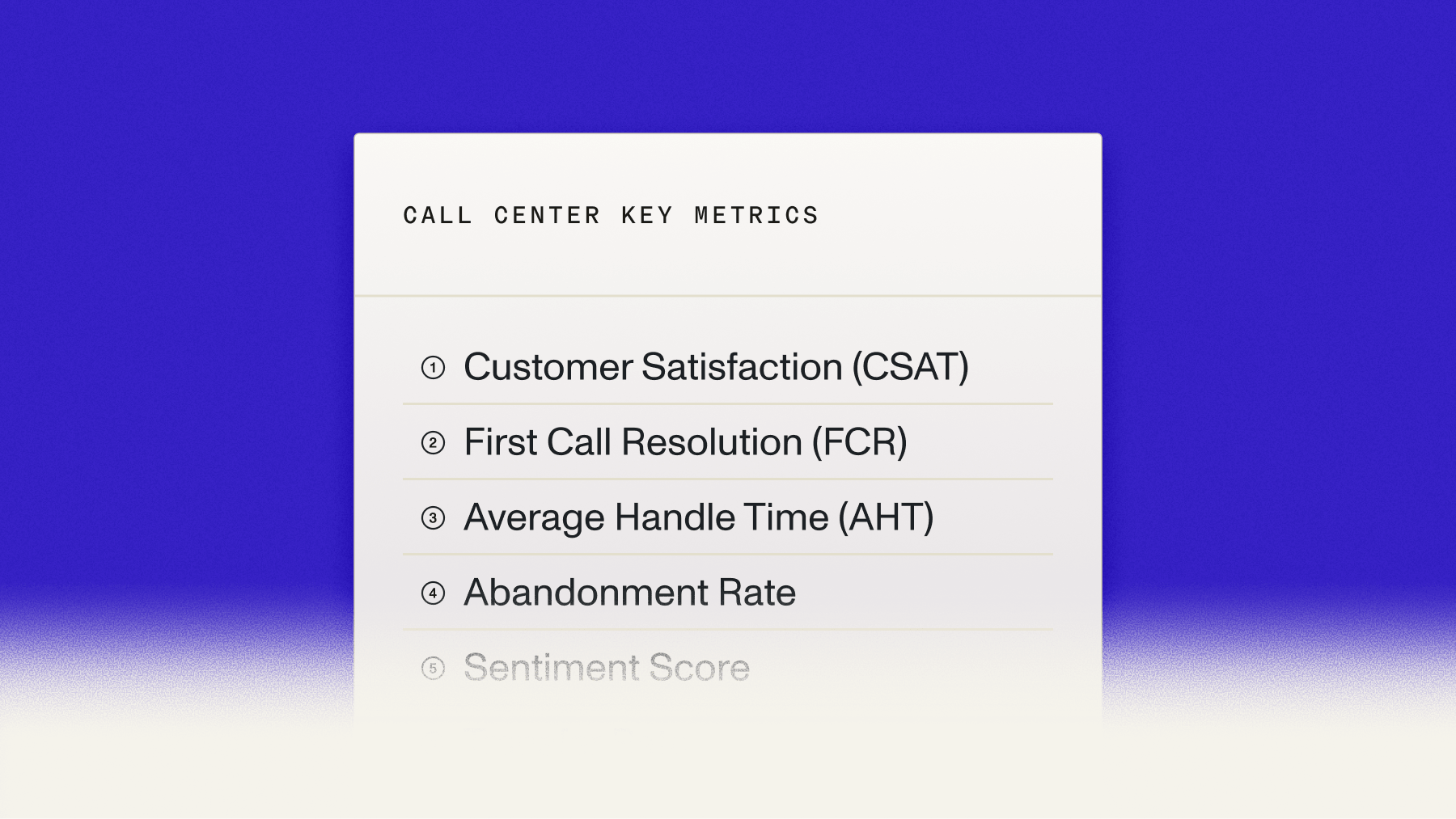
Support organizations use conversation intelligence to monitor agent performance, ensure quality standards, and identify emerging issues. By analyzing conversation patterns, support teams reduce average handle time and improve first-call resolution (FCR) rates, which has a direct financial impact, as contact center research shows every 1% improvement in FCR can reduce operating costs by 1%.
Common implementations include:
- Automatic ticket classification and routing
- Sentiment-based escalation triggers
- Proactive issue resolution based on trending topics
Healthcare organizations
Healthcare providers use conversation intelligence for automated patient documentation and quality assurance. Nuvia Dental Implant Center leverages this technology to ensure consistent patient communication while reducing documentation time significantly, an impact reflected in one clinical study where AI tools decreased time spent in EMRs from 90.1 to 70.3 minutes per day for users.
Key healthcare applications include:
- Automated clinical note generation
- Treatment plan adherence monitoring
- Regulatory compliance verification
Financial services
Banks, insurance companies, and financial advisors implement conversation intelligence for regulatory compliance and client relationship management. Every client interaction is automatically monitored for required disclosures, suspicious patterns, and service quality.
Critical use cases include:
- Automated compliance monitoring for MiFID II and other regulations
- Fraud detection through conversation pattern analysis
- Client satisfaction tracking and service improvement
Product and marketing teams
Product organizations mine customer conversations for feature requests, usability issues, and competitive intelligence. Marketing teams track how messaging resonates in real customer interactions, accelerating product-market fit and improving go-to-market strategies.
Conversation intelligence software: Build vs. buy considerations
When adopting conversation intelligence, organizations face a critical decision between two approaches:
The 'build' approach doesn't mean starting from scratch. By using a foundational Voice AI platform like AssemblyAI, companies like CallSource and Dialpad can focus on their unique application logic while relying on proven, scalable AI models for transcription and speech understanding.
The choice depends on your goal: are you simply using conversation intelligence, or are you building it into the core of your business?
The evolution toward real-time conversation intelligence

The 2025 State of Conversation Intelligence Report shows that 80% of teams integrated conversation intelligence more than a year ago, and real-time capabilities are emerging as the next requirement. As the technology moves from experimental to business-critical, organizations are shifting from post-call analysis to live insights that can influence outcomes while conversations are still happening.
"If there's one thing we heard loud and clear, it's that real-time capabilities are the next requirement. Whether live transcription, in-the-moment coaching, or agentic workflows, the shift is already underway," explains Jason Tatum, VP of Product at CallRail.

The data supports this direction. When asked about future capabilities, 61.5% of respondents identified voice agents with real-time conversation control as most exciting, while 47.37% listed adding real-time speech-to-text and agentic workflows as a top investment priority for the next year.
Three key factors are reshaping the industry:
- Cost reduction and efficiency gains push teams toward automation and real-time workflows, and Gartner predicts that 70% of organizations will adopt structured automation by 2025. "[There will be a] huge focus on real-time functionalities—coaching and so on. Also on automation—getting answers in front of people before they even think of the question," notes Galya Dimitrova, Head of Product.
- Advancements in AI models enable better contextual understanding. "Strong, sustained tailwinds from improving model accuracy will bring conversational intelligence into more workflows," observes Craig Bonnoit, Founder/Co-founder.
- Demand for better customer experience drives personalization at scale with embedded AI agents. "Businesses will leverage hyper-personalization using AI-driven insights to tailor customer interactions in real time, improving engagement and satisfaction," explains Rishabh Jain, Engineering Leader at Clapingo.
The shift isn't just technical—it's strategic. Jeff Whitlock, Founder & CEO of Grain, predicts: "We'll see it move from early adopters to a deep early majority. It will become less of just a sales thing and be more broadly used across most functions."
Why streaming speech-to-text enables real-time conversation intelligence
Real-time conversation intelligence capabilities depend entirely on accurate, low-latency speech recognition. Every feature and analysis depends on transcript accuracy—if the words are wrong, the outcomes are too.
Traditional speech-to-text systems create a fundamental tradeoff between speed and accuracy. Most streaming solutions sacrifice precision for lower latency, resulting in unstable transcripts that change as more audio is processed.
Modern streaming speech-to-text systems solve this challenge through immutable transcripts. Unlike traditional approaches where text changes as the system "reconsiders" earlier predictions, immutable transcription provides stable, final text that downstream systems can immediately process.
Real-time conversation intelligence applications need speech recognition that delivers accurate transcripts in approximately 300 milliseconds while maintaining high accuracy across diverse acoustic conditions. This includes background noise, multiple speakers, varied accents, and telephony compression.
Leading streaming speech-to-text systems achieve this through several innovations:
- Intelligent end-of-turn detection combines acoustic and semantic analysis to determine when speakers finish their thoughts; this enables natural conversation flow without awkward interruptions.
- Speaker diarization for streaming audio identifies who said what in real time. This is typically enabled by setting
speaker_labels: truein the WebSocket connection parameters, which allows the model to distinguish between speakers on a single audio stream. For use cases with physically separate audio sources (e.g., agent and customer on different telephony channels), a multi-channel approach can also be used to achieve perfect speaker separation. - Domain-specific optimization handles industry terminology and jargon that general-purpose models often miss, particularly important in specialized contexts like healthcare, legal, or technical support.
These capabilities enable conversation intelligence platforms to move beyond post-call analysis toward live coaching, real-time compliance monitoring, and in-the-moment decision support. This is exactly the foundation that powers effective real-time agent assist systems.
Use case deep-dive: Real-time agent assist
Real-time agent assist shows how streaming speech-to-text transforms conversation intelligence from reactive analysis to proactive guidance. Real-Time Agent Assist (RTAA) is an AI-driven system that listens to live customer conversations and provides agents with immediate, contextual support directly on their screens.
The technology operates through a sophisticated real-time pipeline:
- Audio capture: Live conversation audio streams from telephony systems with separate customer and agent channels
- Speech processing: Streaming ASR converts speech to text with ~300ms latency
- AI analysis: Multiple models analyze sentiment, intent, and compliance in real-time
- Insight delivery: Contextual assistance appears on agent screens within seconds
Leading providers like AssemblyAI achieve transcription latency of approximately 300 milliseconds with models like Universal-3 Pro Streaming. For complex understanding tasks like intent extraction or compliance checks, developers use the AssemblyAI LLM Gateway to apply Large Language Models (LLMs) to the conversation data in real time.
The business impact is significant, as one recent study found that AI assistance made call center operators 14% more productive. Organizations implementing RTAA systems report improvements in Average Handle Time and higher First Call Resolution rates when agents can provide immediate, accurate responses without placing customers on hold.
The success of real-time agent assist depends on the quality of the underlying speech recognition. Contact center audio presents unique challenges including background noise, diverse accents and dialects, technical jargon, and compressed audio from traditional telephony systems.
Building conversation intelligence with Voice AI
Conversation intelligence platforms require three core Voice AI technologies to deliver reliable business insights:
Implementation considerations
Building these capabilities in-house requires specialized expertise in speech processing, natural language understanding, and scalable infrastructure. Most successful teams leverage dedicated Voice AI platforms that provide both foundational models and the LLM Gateway for applying LLMs.
Leading organizations choose platforms that provide:
- Medical and industry-specific vocabulary support
- 99.9%+ uptime with enterprise security
- Simple API integration with existing systems
- Scalable pricing that aligns with growth
Companies across industries trust AssemblyAI's Voice AI platform for their conversation intelligence needs. From startups to enterprises, teams rely on our speech recognition and understanding models to power applications that serve millions of users. You can build and test these capabilities yourself by trying our API for free.
Transform customer interactions with conversation intelligence
Conversation intelligence has evolved from experimental technology to business-critical infrastructure. Organizations implementing these systems gain measurable competitive advantages through improved coaching, enhanced customer experiences, and data-driven decision making.
Success depends on choosing the right Voice AI foundation—specialized platforms deliver the accuracy and reliability that conversation intelligence applications require.
Ready to build conversation intelligence into your application? Start with AssemblyAI's API and join the companies transforming customer conversations into business intelligence with Voice AI.
Frequently asked questions about conversation intelligence
What is the difference between conversation intelligence and conversational AI?
Conversation intelligence analyzes human conversations to extract insights, while conversational AI actively participates in conversations through chatbots or voice assistants to automate interactions.
What are the first steps to implement conversation intelligence?
Start by identifying a specific business problem (like improving sales coaching), then pilot with a high-impact use case before expanding to broader implementations.
How is ROI measured for conversation intelligence?
ROI is measured through team-specific KPIs. For example, industry data shows the technology can lead to a 25% increase in sales conversion rates. Sales teams track these win rate improvements and shorter sales cycles, while support teams monitor First Call Resolution rates and Customer Satisfaction scores.
Should I prioritize real-time or post-call conversation intelligence?
Real-time capabilities are essential for agent assist and live coaching, while post-call analysis works well for trends and strategic insights. Most organizations start with post-call analysis to prove value, then add real-time capabilities.
Lorem ipsum dolor sit amet, consectetur adipiscing elit, sed do eiusmod tempor incididunt ut labore et dolore magna aliqua. Ut enim ad minim veniam, quis nostrud exercitation ullamco laboris nisi ut aliquip ex ea commodo consequat. Duis aute irure dolor in reprehenderit in voluptate velit esse cillum dolore eu fugiat nulla pariatur.